
Twin technology or digital twin technology is an essential tool a business must consider when it comes to automating commercial spaces into smart buildings with futuristic sustainable architecture. The demand for this technology is projected to reach a whopping 3.83 billion USD in 2025, starting from its market size of 0.3 billion USD in 2020.
Is it a brand new concept?
The idea of twin technology has existed for decades as physical and virtual products represented in the same kind of spaces, respectively, connected by data and information. In contrast, today every asset in your property, whether it is physical or digital, can be represented virtually and interacted with in user-friendly interfaces.
Why digital representation?
Managing building operations with maintenance checklists and loads of numerical data leaves a huge void in understanding the operations. However, creating digital replicas using digital twin technology and simulating indoor spaces gives managers a better virtual view of the building and makes the job easier for the staff. Also, it aids the system in analyzing the elements of nature and calibrates the climate control systems in the building to ensure comfortable and sustainable indoor environments.
Data-oriented decisions
Impulsive decision-making is a clear no if you want your business to function at its fullest potential. Making decisions about building systems based on numbers is a proper way of arriving at meaningful conclusions and planning operational strategies. Digital twin technology ensures that you are aware of the exact status of assets in your building and the goals you need to achieve.
How do digital twins work?
Digital twins, also called IoT digital twins, in a BMS are the virtual representation of the digital assets of a building which are connected to the BMS through the internet. They collect data from the assets through sensors and transmit information to their platform. These systems are essentially part of the building management system and seldom work in isolation.
Twin Technology: 9 Ways it Benefits Future Buildings
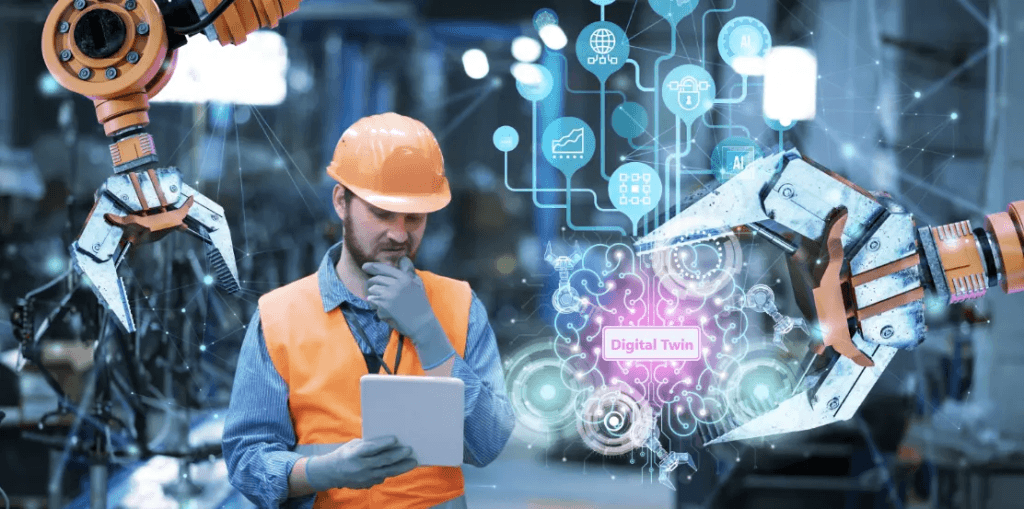 Twin technology enables managers to make smart and informed decisions through insights and actions, and the benefits they deliver to the business are inexhaustible. The reason for this is that an optimized building system increases productivity and reduces power consumption, carbon footprint, and expenses.
The benefit of digital twins is not merely restricted to digital representations of building assets. They are integrated components of building management systems (BMS) that enhance the way building assets are viewed and managed. This virtual twin technology can play a vital role in future buildings on many fronts.
Some of the reasons are as follows:
1. Simulating effective models
Twin technology is a useful tool if you want to try multiple models without spending heavily on manufacturing them. You can use this virtual twin technology to simulate models for energy saving, sustainability, and cost-effective measures.
2. Predictive maintenance
The IoT digital twin brings ease for the organization to work on the predictive maintenance of building assets. Projecting when an asset may require maintenance or component replacement gets easier using twin technology.
3. User-friendly digital interface
Using IoT digital twins to monitor the indoor environment of a building gets more visual as the entire system can be viewed through an attractive visual interface. Thus, controlling an HVAC system, optimizing room temperature, air quality, and humidity, and identifying problem points is easier.
4. Identify potential problems
Virtual twin technology can help businesses identify potential problems in the building systems in advance and avoid unplanned investments in non-functional systems. It also eliminates glitches entering into the systems and adds cost overheads and time delays.
5. Energy efficient buildings
Simulating building systems virtually can change the way you approach building management. Analyzing how different energy-saving measures work using this tool can help managers estimate the energy consumption in those systems and select what works best for the business.
6. Space utilization and asset monitoring
In a hotel, monitoring how the hotel rooms are used and taking care of things such as lighting, AC, and occupancy can be daunting. The IoT digital twin can make this an easy task by tracking assets and the building's indoor parameters through sensors.
7. Improved transparency of building operations
In contrast to traditional systems, where details are buried in physical or digital files, digital twins bring transparency by enabling the people involved to access relevant data securely. This improves communication and makes the job easier, effective, and hassle-free.
8. Remote monitoring of facilities
IoT digital twins can be used to remotely monitor the performance of building assets such as HVAC, lighting, and networks and cut down the efforts of the staff involved in the process. Thus, it considerably reduces the task completion and also the turnaround time for the services.
9. Workplace optimization
With every building system, asset, and space constantly monitored and managed using digital twin technology, the inhabitants of the building enjoy increased comfort in the indoor environment. This in turn enables better management of building operations and reduces asset downtime, thus boosting the performance of the workforce.
Twin technology is unraveling its potential everyday and businesses are finding its application in different areas. More businesses are opting for building management systems to manage their commercial spaces, which in turn comes with the benefit of digital twins. Future businesses are going to be smarter, more efficient, and more productive, thanks to digital twin technology.

