
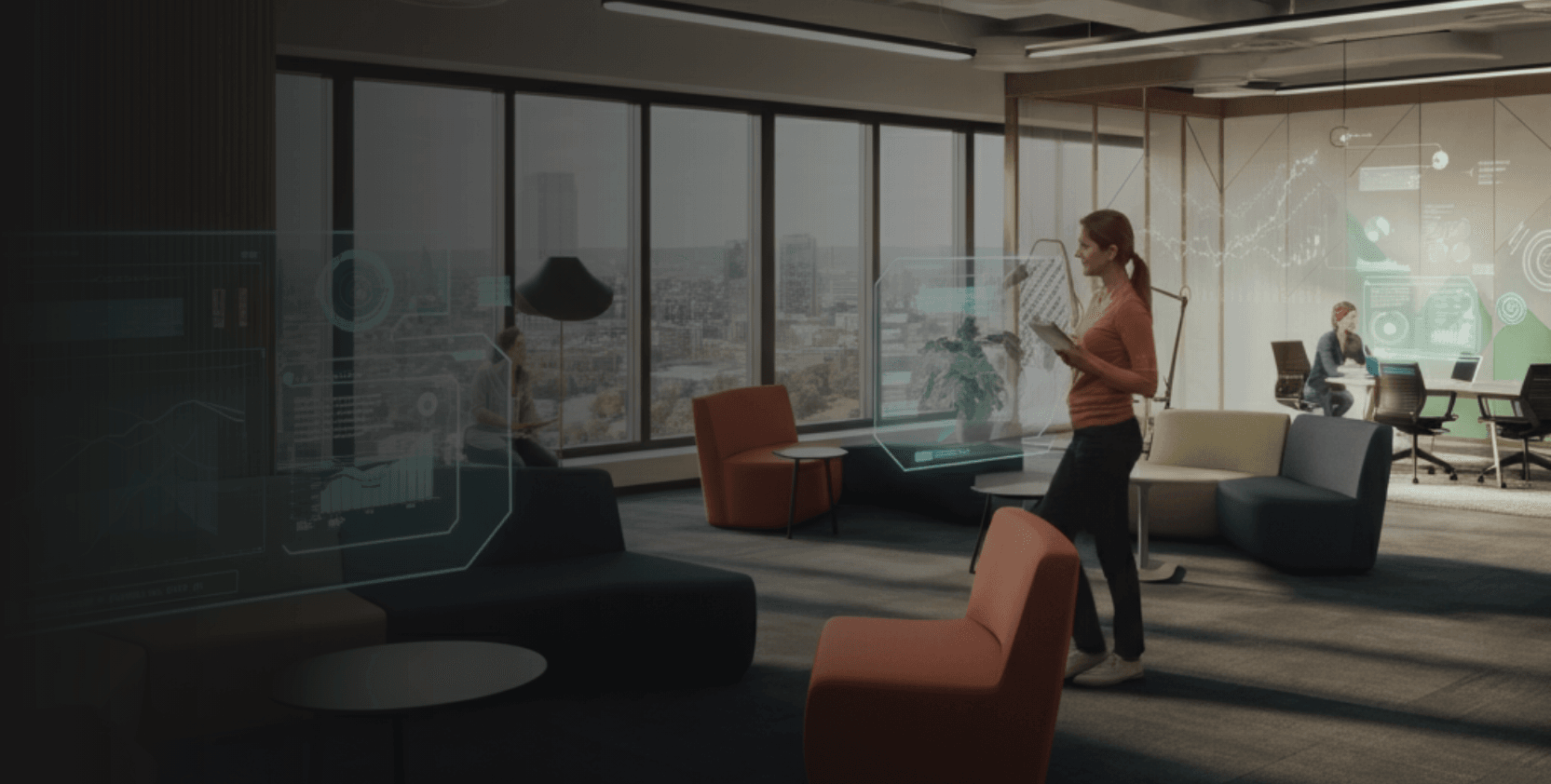
The rise of hybrid work models has permanently altered how we interact with the office. Empty desks, deserted meeting rooms, and half-full floors are now common sights. This shift has created significant space inefficiencies, leaving companies paying for real estate that sits unused. How can businesses adapt their physical footprint to this new reality? The answer lies in the data.
Predictive analytics offers a powerful, data-driven approach to optimize every square foot, transforming workplaces into dynamic, cost-effective environments. By linking space utilization with asset performance and overall efficiency, organizations can make smarter decisions that benefit their bottom line and their employees.
5 Ways Predictive Analytics Transforms Space Utilization
Predictive analytics is more than just collecting data; it's about turning that data into forward-looking insights. It moves businesses from reactive adjustments to proactive strategies, revolutionizing space management, and facility operations. This technology allows for a deeper understanding of how every part of the workplace is used, paving the way for intelligent and efficient space planning.
I. Turning Sensor Data into Actionable Insights
Modern offices are rich with data sources. IoT sensors on desks and in common areas, Wi-Fi login data, and building access systems all provide a real-time picture of space usage. By itself, this information is just noise. However, when fed into an analytics platform, it becomes a goldmine of actionable insights.
1.Workplace analytics algorithms spot patterns such as:
- Under booked meeting rooms
- Overcrowded collaborative spaces
- Departments favoring remote work on specific days
2.Predictive analytics for space utilization goes beyond past trends and uses historical data to forecast:
- Future demand for desks and rooms
- Optimal use of common spaces
3.Space utilization forecasting enables informed decisions about:
- Space planning for right-sized work environments
- Adjustments based on shifting usage patterns
4.Effective space management starts here, giving you a true view of how the work environment is utilized.
2. Identifying Underutilized Assets and Equipment
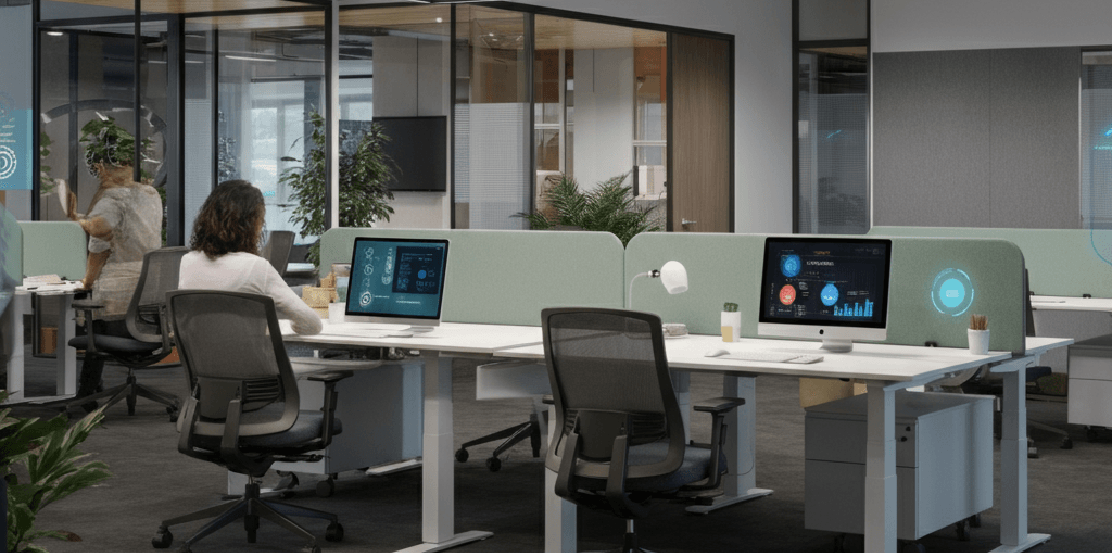
Space is not the only asset that can be optimized. Office equipment, from high-end video conferencing systems to specialized printers and shared devices, represents a significant investment. Predictive analytics help track the usage of these assets, revealing which tools are essential and which are gathering dust.
1.Asset data reveals:
- Frequently used vs. underused equipment
- Opportunities for rightsizing and reallocation
2.Efficient space management combined with predictive analytics helps to:
- Avoid unnecessary new purchases
- Lower maintenance, licensing, and energy costs
3.Integrating asset insights with space planning leads to:
- Maximum value from every dollar invested
- More streamlined facility efficiency
4.Using workplace analytics alongside predictive analytics for space utilization ensures every asset, not just every space, is optimized.
3. Optimizing Space in Hybrid Work Models
Hybrid work introduces a major challenge for traditional office management: fluctuating occupancy. With employees splitting their time between home and the office, daily headcounts can be unpredictable. This makes fixed seating assignments and rigid layouts impractical and inefficient. Predictive analytics is the key to managing this fluidity.
1.Use space utilization forecasting to:
- Predict daily and weekly attendance
- Support dynamic space planning with hot-desking/hoteling
2.Enable adaptive layouts by:
- Using movable partitions and multi-purpose furniture
- Allowing for quick reconfiguration based on real-time demand
3.Benefits include:
- Greater resource flexibility and efficient office space management
- Core principles of smart space optimization brought to life
4.Leveraging predictive analytics for space utilization creates agile, employee-friendly environments that support both productivity and satisfaction.
4. Linking Space Efficiency with Sustainability Goals
Optimizing your office footprint is not just about saving money; it's also about building a more sustainable future. Unused or inefficiently managed space leads to wasted energy. Predictive analytics help bridge the gap between space efficiency and sustainability.
1.Leverage workplace analytics to:
- Automate HVAC and lighting based on occupancy
- Streamline cleaning schedules to focus on used areas
2.Integrate occupancy data with facility systems for:
- Baseline energy savings and reduced emissions
- Evidence supporting ESG compliance
3.Real-world example:
- Powering down entire floors on low attendance days for substantial energy efficiency
4.Pursuing sustainability with intelligent space management is an integral part of smart space optimization strategies.
5. Enhancing Facility Management Efficiency
For facility managers, predictive analytics is a game-changer. It shifts their role from reactive problem-solver to proactive strategists. Instead of responding to complaints about unavailable rooms or broken equipment, they can use predictive dashboards and automated alerts to get ahead of issues.
1.Predictive dashboards enable:
- Real-time monitoring of space management metrics
- Automated alerts for emerging facility issues
2.Maintenance can be scheduled:
- Based on usage data, not rigid timelines
- Prioritizing high-traffic spaces for preventive upkeep
3.Integration with asset management systems yields:
- Streamlined coordination for maintenance and space planning
- Proactive decision-making to avoid costly disruptions
4.Ultimately, combining workplace analytics, space utilization forecasting, and predictive analytics for space utilization leads to a culture of continuous improvement and innovation in facility operations. This is the heart of smart space optimization.
Achieving cost savings through smarter decisions
The ultimate benefit of predictive analytics for space utilization is financial. Commercial real estate is one of the largest expenses for most companies and reducing that footprint can lead to massive savings. By identifying and consolidating underused space, businesses can potentially reduce their lease obligations or sublet entire floors. Studies suggest that organizations can achieve cost reductions of 15–30 percent through smarter space planning.
- These savings extend beyond real estate. Using space utilization forecasting and workplace analytics, predictive analytics informs better capital investment decisions, guiding space redesigns, and future expansion plans.
- Efficient space management using these tools supports both short- and long-term cost reduction initiatives.
- With smart space optimization and regular review of trends from predictive analytics for space utilization, businesses are able to maximize ROI and streamline operations.
The future of smart space optimization
The journey toward intelligent workplaces is just beginning. The combination of AI, IoT, and predictive analytics will continue to evolve, offering even more sophisticated capabilities. The focus is shifting from analyzing historical data to enabling real-time, adaptive optimization. Imagine an office that automatically adjusts its environment—lighting, temperature, and even layout—based on the number of people present and the type of work they are doing.
- The next wave of smart space optimization will integrate workplace analytics, space utilization forecasting, and predictive analytics for space utilization into all aspects of facility and asset management.
- With ongoing advances in space management technology, organizations will benefit from ever-increasing accuracy in planning and forecasting.
- By embracing these tools, companies will create workplaces that are not only more efficient and cost-effective but also more responsive to employee needs.
A data-driven approach to space planning powered by predictive analytics and these advanced systems creates an environment that enhances productivity, collaboration, and the overall employee experience, making the office a destination people want to visit.

