
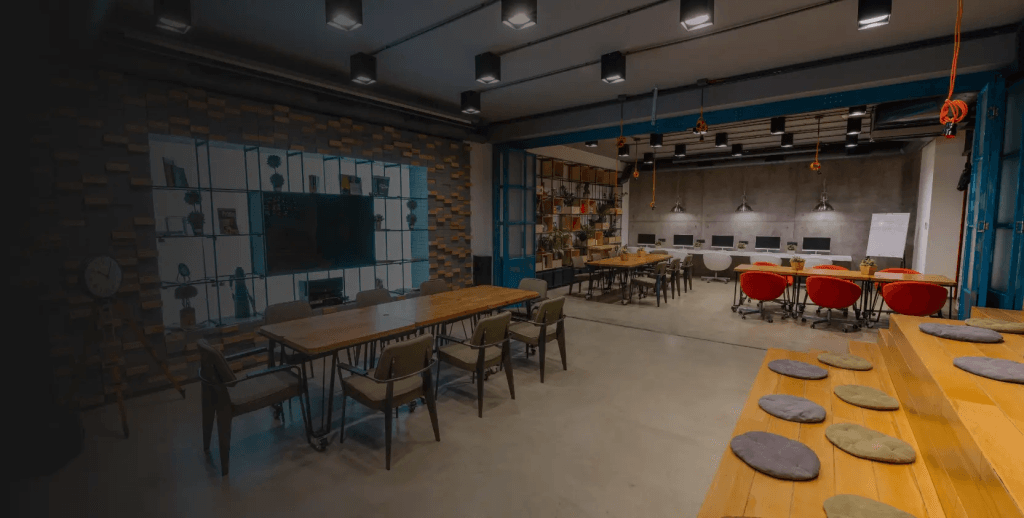
In today's ever-evolving professional landscape, the future of work is traversing towards remote, digital, and flexible work arrangements. The futuristic office spaces are not just about when and where we work but also about how workplaces are designed to enhance productivity, adaptability, and employee well-being.
Apart from an increased focus on remote work, forward-thinking organizations are embracing innovative office concepts and strong trends in cost efficiency and resilient design for sustainability. In this exploration of modern workspace design, we focus on the future of work and its evolving demands.
Here are the 5 key concepts that are shaping the future of work spaces, nurturing creativity, collaboration, and work-life balance.
1) Embracing flexibility
Futuristic office spaces are no longer bound by rigid desks and cubicles. A flexible working environment is one that easily adjusts to the dynamic requirements of its employees and accommodates varied work styles, work schedules, and productivity needs. Flexible workspaces go far beyond the hybrid work model, offering employees different work settings.
Flexible workspaces in the future of office spaces can include movable or ergonomic furniture that the employee can adjust to his/her preference and be comfortable while working in any position. Adjustable desks and partitions and ergonomic furniture allow employees to shift their focus between individual tasks, group projects, and team meetings with ease. This trend will continue for the future of work with more people seeking a mix of remote and on-site work. Companies must provide workers with more flexible workspaces so they can better manage their work-life balance.
2) Incorporating biophilic design
Our comprehension of the advantages of nature at work has developed into a critical component of the future of office spaces. Designing with biophilic principles, which include living walls, lots of natural light, indoor gardens, and sustainable materials, improves air quality while also fostering employee well-being and igniting creativity.
Green building and sustainable building approaches have earned their rightful space in the future of work with context to biophilic design. These offices have a lesser carbon footprint thanks to eco-friendly construction practices, energy-saving technology, and green building materials. Biophilic components further increase sustainability by enabling energy savings through better insulation and climate control inside buildings.
3) Smart and tech-integrated spaces
As technology is advancing, the future of work will rely heavily on artificial intelligence and automation for day-to-day operations. Futuristic office spaces will deploy intelligent solutions like IoT sensors for HVAC and climate control, communicative dashboards for dynamic presentations, and intuitive apps for smooth task management.
This shift in automating tasks and using IoT technology can be regarded as the digital future of work. This will free up time for employees to focus on crucial tasks and allow them to focus on more creative pursuits. Businesses will also benefit from incorporating automation and advanced technology by streamlining processes, reducing human error, and increasing efficiency.
4) Focus on sustainability and green building initiatives
As part of the futuristic office space trend, companies are now focusing more on sustainable buildings and green buildings to make their office space environment-friendly. In futuristic office spaces, this can include eco-friendly materials and design elements, deploying recycling and waste reduction programs, and using sustainable practices for daily operations.
Furthermore, with the usage of advanced IoT sensors and automation that controls power consumption, futuristic office spaces will reduce their carbon footprint. This will make sustainable building and green building a reality.
Along with the sustainable practices in the office, the futuristic offices will focus even more emphasis on supporting the productivity and well-being of their employees as well as the larger community through their actions as corporate social responsibility. By doing so, in the future of work, companies will be aiming to protect the environment and attract socially responsible employees.
5) Flexibility and hybrid work arrangements
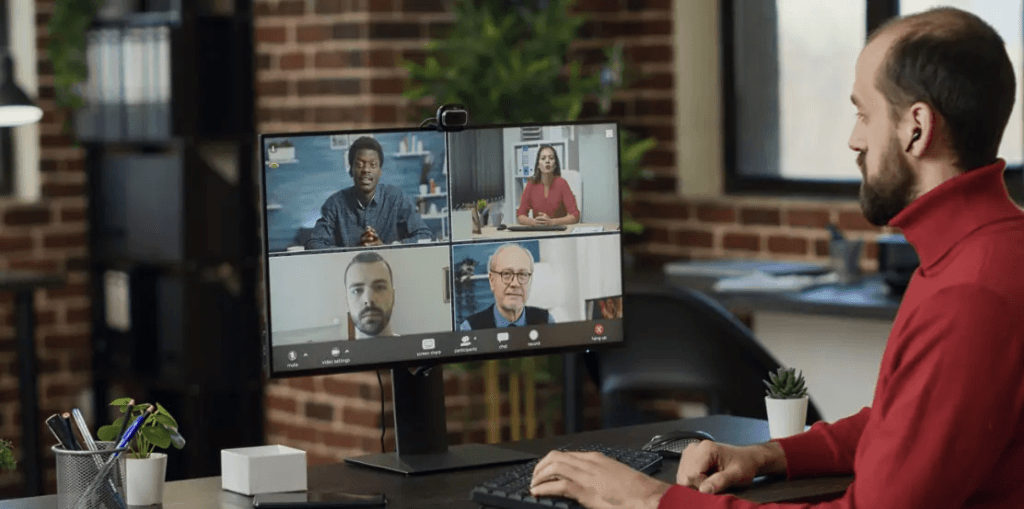
Future workers demand more freedom in their work environment and schedule. The digital future of work must support both in-person and remote work. This entails offering flexible workplaces that encourage teamwork and solitary work, as well as technology that connects on-site and remote workers without any hiccups.
How are organizations achieving this occupancy fluctuation?
- By getting rid of fixed desking and incorporating unassigned seating arrangements which the employees will choose based on the need.
- By adopting space management software, desk booking, and in-house concierge.
- Creating more collaborative zones, areas for relaxation and break, and third spaces to work from.
The Future of Office Spaces: 5 Things Employees Really Want
If your organization has adopted hybrid or remote work, then they have taken the plunge toward building the future of work. But organizations that will not evolve with the needs of the future workforce, will get behind in the race to build the foundation of the future of work.
That being said, here are some of the things employees expect from their offices/company, for which constructing a new office building is not required. By changing the way things are done and incorporating some of the not-so-traditional settings, companies can support a high-performing workforce with ease.
Workplaces to support high-performance
The future office spaces must be designed to let employees have the freedom to work collaboratively and asynchronously. The balance between these two work styles is work exactly the futuristic offices need to work on.
Conference rooms with comfortable lounges to coordinate and strategize and private office-style rooms for single meetings are a must in the future of work office spaces. After the pandemic, many offices have adopted hybrid work and some even are fully onsite. Giving the employees a work environment that is better than their home for productivity, is something that will help in employee retention. Offices like Google and Apple have game rooms, relaxation rooms, and even massage rooms which already check the tick mark of futuristic office spaces.
Diversity and inclusion in the workplace
Being an organization with a diverse workforce has been in trend for quite some time, but what employees look for is inclusion. Diversity is not the same as inclusion and companies must look for changes to address these problems.Many junior employees feel motivated to work when there is an open dialogue system to share ideas and thoughts with the management. The future of work will not only be defined by the use of automation and green building practices, but how companies ensure equal treatment and wage rates for both genders, races, and religions.
Mental wellbeing
According to the Work and Well-Being Survey conducted by the American Psychological Association, 81% of workers say that they will prioritize organizations that support mental health and feature a supportive environment for work-life balance. Futuristic office spaces can include facilities such as fitness and meditation rooms, healthy food options at the office, introducing mental health programs, and helping in distressing employees who are experiencing burnout.
Futuristic office spaces are giving more emphasis on green building which includes access to natural light and fresh air along with some greenery inside the workplace. Ergonomic desks, quiet spaces, and entertainment rooms are all components that employees want to have in their workspace. All these things can boost employee morale and productivity and reduce the rate of absenteeism.
Going green is the new norm
Just putting trash cans in front of every row and lights that turn off when there is no one in the room is not enough. What makes a big change is going for a sustainable building and green building that employees expect from organizations now. Sustainable building practices can be achieved by both policies and interior design.
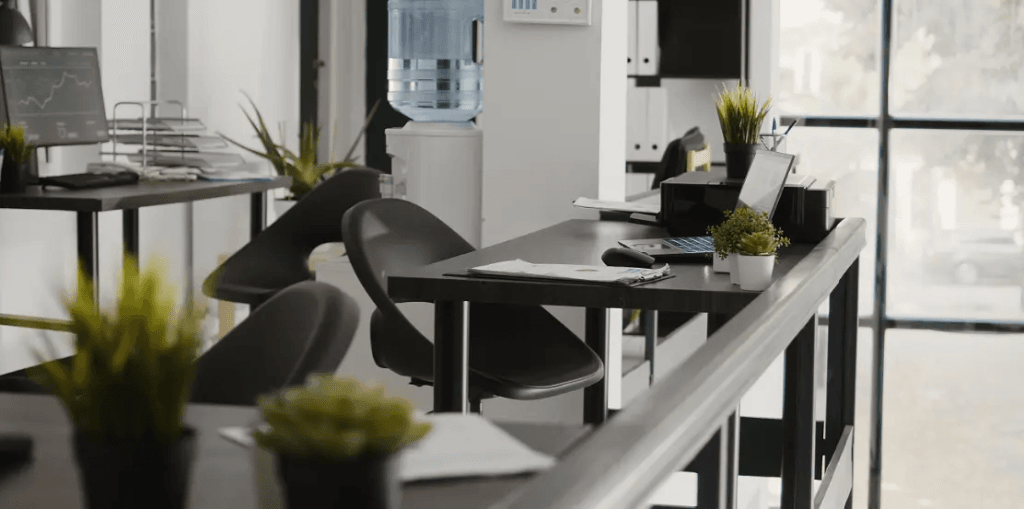
Incorporating biophilic design with green walls, plants at desks, natural lights, and solar panels are some of the ways the futuristic offices can be changed. Many employees expressed to work in places with natural outdoor areas as well as greenery throughout the building. For example, Apple is on its way to having its facilities 100% powered by natural and renewable resources. This makes the building more green and sustainable and will reduce the carbon footprint.
Skills over role
As technology continues to evolve, companies need to prioritize skills over designation. Many young talents have skills that are needed to understand today's AI-powered technology even without years of experience. Employers should focus on upskilling the skills of employees rather than matching the job role exactly.
This approach in the digital future of work allows employers to benefit from each worker and, in turn, foster a creative and flexible workspace.
Takeaway These are some of the future work trends that are expected in futuristic office spaces. By staying ahead of the curve and incorporating these trends in the facility, companies can attract and retain more potential talent while also catering to the environment. Deploying green building trends will bring a brighter, healthier, and more sustainable tomorrow. Making your building automated is another way to make the operations seamless.
Sclera helps facilities transform their buildings into smart buildings and in a smooth workflow. Manage your assets and operations with a single pane of glass and automate work orders and inspections to detect anomalies even before they happen.
Make your building sustainable and future-ready for the workforce of tomorrow.

