

Edge-cloud hybrid operations enable organizations to lead autonomous personnel through smart, integrated technology. Combining cloud and edge computing enhances the daily functioning of facility management, making businesses more responsive and reliable. For years, companies relied solely on centralized cloud computing to handle data. While productive for large-scale analysis, this approach can introduce delays and create increased failure due to a single computing source. Now, a hybrid approach is transforming the way companies operate by bringing computation closer to where data is generated.
This hybrid model blends the strengths of local processing with the power of global analytics. Data from building systems, like HVAC, security, and lighting, is processed instantly on-site using edge computing. This instant feedback loop allows for real-time adjustments, prominently reducing latency. Meanwhile, aggregated data is sent to the cloud for deeper analysis, predictive maintenance, and long-term strategy development. This combination creates a truly resilient operations architecture that keeps critical systems running smoothly, even if the connection to the cloud is temporarily lost. The goal is to build an all-rounder system that is both smart and dependable.
As per Gartner, 90% of organizations will incorporate a hybrid cloud approach through 2027. Since modern facilities generate a large amount of data every second, managing this data flow effectively is impossible without a robust infrastructure. A hybrid system ensures that essential alerts and automated responses are handled locally, avoiding the delays of a round-trip to a distant data center. This architecture is not just about efficiency; it's about creating safer and sustainable environments for everyone inside.
Improving Facility Performance Through Edge-Cloud Strategies
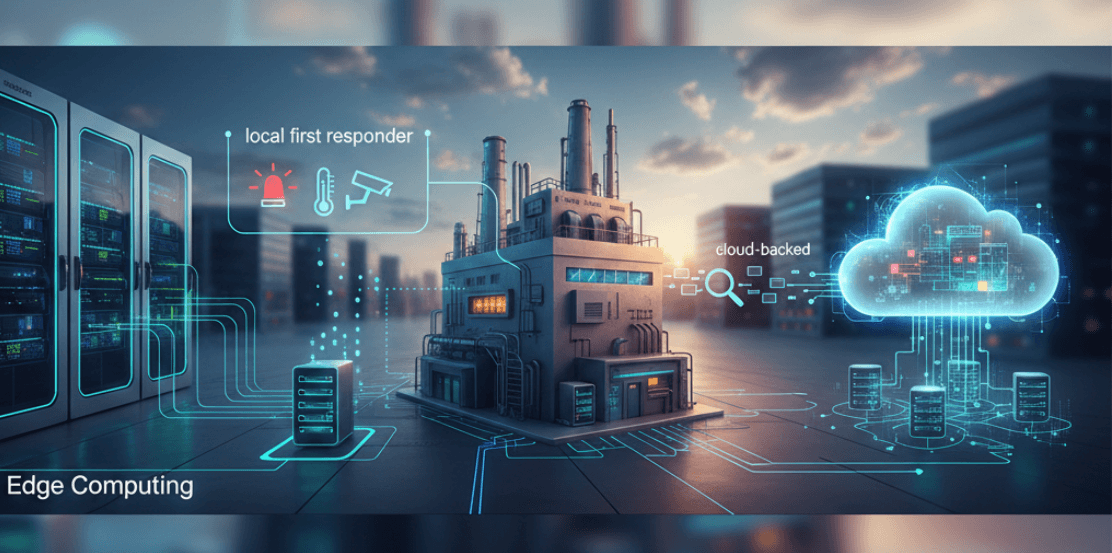 Edge-cloud hybrid architecture in an industrial setup demonstrating local edge computing with cloud-backed analytics for fast response and operational efficiency.
A well-designed edge-cloud architecture is the foundation for remodelling building operations. It provides a framework that balances immediate needs with future goals and requirements, ensuring both resilience and scalability. By strategically positioning computing resources where they are most effective, facility managers can optimize performance and achieve new capabilities. This approach moves beyond a rigid "all-or-nothing" choice between local and remote processing.
The real innovation lies in the architectural patterns that make this synergy potent. These patterns don’t just represent theoretical concepts; they are practical blueprints for developing a hybrid infrastructure for building operations. Each pattern addresses specific challenges, from handling intermittent connectivity to managing vast fleets of devices. By implementing these strategies, organizations can build systems that are adaptive and well-prepared for the future of building management.
Key architectural patterns for hybrid operations
To successfully integrate cloud and edge computing, facility managers can adopt several proven architectural patterns. These models provide a structured way to distribute workloads and manage data flow, ensuring that the system remains efficient and resilient. • The "local first" responder: In this pattern, all critical operations are handled by edge devices on-site. The edge node processes data from sensors and executes immediate commands, such as adjusting temperature or activating security alarms. It operates independently, ensuring that core functions continue even without an internet connection. Data summaries and non-critical information are then synchronized with the cloud when connectivity is available. This model is ideal for environments where uptime is non-negotiable, like hospitals or data centers. • The "cloud-backed" analyst: This approach uses the edge for initial data filtering and aggregation. Raw data is processed locally to remove noise and identify important events. This refined dataset is then sent to the cloud, where powerful analytics and machine learning algorithms can uncover trends, predict equipment failures, and optimize energy consumption across a portfolio of buildings. It leverages the vast storage and processing power of cloud computing services for deep insights that would be impractical to generate at the edge. • The "tiered analytics" model: This pattern creates a multi-layered processing hierarchy. Simple, time-sensitive tasks are performed on the device itself. More complex tasks are offloaded to a local edge gateway or server. The most demanding analytical workloads, which require historical data from multiple sources, are reserved for the cloud. This tiered approach optimizes resource usage, reduces network traffic, and ensures that each task is handled by the most appropriate computing layer.
How Sclera’s Optima enables a hybrid model
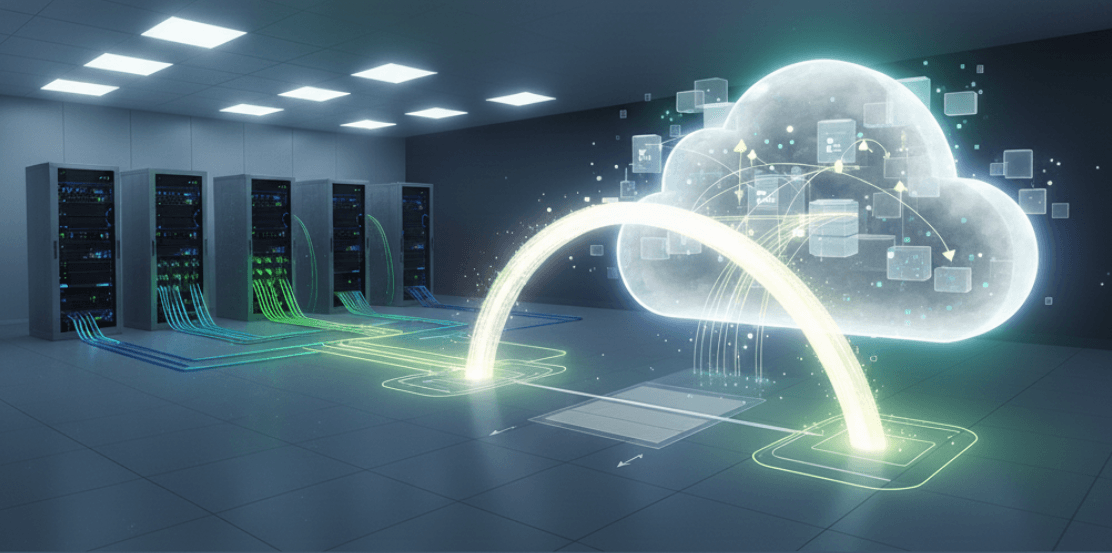 Optima seamlessly bridges the edge-cloud gap, allowing crucial building operations like HVAC control to run locally for instant response, while maintaining central management and security.
Putting these patterns into practice requires a platform that can seamlessly bridge the gap between edge and cloud. The Optima hybrid model is designed specifically for this purpose. It provides a unified framework for deploying, managing, and securing applications across a distributed infrastructure.
Optima allows facility operators to deploy containerized applications to edge devices with the same ease as deploying to the cloud. This simplifies the management of a hybrid infrastructure for building operations. For example, an HVAC control algorithm can run locally on an edge node for instant response, while the Sclera platform manages its lifecycle and pushes updates from a central control plane. This ensures consistency and security across all sites, reducing the operational burden on IT teams and empowering facility managers to focus on what they do best: running efficient and effective buildings.
Building a Strategic Future with Edge-Cloud Infrastructure
Today, businesses sustain and thrive on hybrid strategies that are robust, scalable, and intelligent. The fusion of edge computing and cloud computing is not just a technological trend; it is an essential shift in how we design and manage the building infrastructure. It allows for a resilient operations architecture that can combat and overcome disruptions and adapt to changing conditions.
Adopting these hybrid patterns allows organizations to gain the best of cloud and edge computing. They get the low latency and reliability of local processing combined with the immense analytical power and scalability of the cloud. This strategic combination transforms building operations from a reactive cost center into a proactive, data-driven asset that enhances occupant experience and drives business value. The future of smart buildings is not just in the cloud or at the edge; it is in the intelligent integration between them.

