
Imagine a building that senses problems before anyone notices, manages energy as if it knows tomorrow’s weather, and creates flexible, comfortable spaces for the people inside, automatically. That’s not science fiction; it’s the new reality with AI in facilities management. As buildings get bigger, more complex, and sustainability goals grow sharper, artificial intelligence is emerging as the missing piece that brings it all together. With innovations in predictive maintenance, energy optimization, and intelligent building management, AI in facilities management is transforming traditional buildings into smart, responsive environments that are efficient, cost-effective, and ready for the future.
5 Ways AI in Facilities Management Is Transforming Industry
Today's facility managers are discovering that AI-driven facility management goes far beyond basic automation. We're talking about systems that learn, adapt, and make decisions that would have taken hours of human analysis just a few years ago.
1. Predictive Maintenance and Asset Management
Remember the days when equipment failures meant scrambling to find repair crews and dealing with unexpected downtime? Those days are quickly becoming history. AI now forecasts equipment failures before they happen by analyzing patterns in vibration data, temperature readings, and usage patterns.
Take elevator maintenance, for example. Instead of following rigid inspection schedules, intelligent building management systems can monitor elevator performance continuously and flag potential issues weeks before they become problems. This approach reduces downtime by up to 70% and cuts repair costs significantly because you're fixing small issues before they turn into major headaches.
2. Energy Optimization and Sustainability
Energy costs are eating up facility budgets everywhere, but artificial intelligence for buildings is changing that game entirely. AI-powered systems in AI-driven facilities monitor energy consumption patterns and automatically adjust heating, cooling, and lighting based on occupancy, weather conditions, and even utility pricing.
Smart HVAC systems powered by AI can reduce energy consumption by 20-30% without sacrificing comfort. These systems learn from building usage patterns and weather forecasts to pre-cool or pre-heat spaces efficiently. Microsoft's campus redevelopment demonstrates this perfectly—their AI-driven systems helped achieve a 30% reduction in energy use while improving occupant satisfaction.
3. Space Utilization and Workplace Experience

The pandemic changed how we think about office space, making smart facility management more crucial than ever. AI helps facility managers understand which spaces get used, when, and by whom. This data drives decisions about everything from cleaning schedules to desk allocation.
Smart sensors track occupancy in real-time, while AI algorithms analyze this data to suggest optimal space configurations. Adaptive lighting systems automatically adjust brightness based on natural light and occupancy, creating comfortable environments while saving energy. AI-driven facilities manage flexible workspaces, automatically adjusting temperature and lighting as people move throughout the day.
4. Security and Risk Management
Building security has evolved far beyond traditional key cards and security cameras. AI in facilities management now includes sophisticated video analytics that can detect unusual behavior patterns, unauthorized access attempts, and even potential safety hazards.
Modern AI security systems can identify when someone enters a restricted area, detect if safety equipment isn't being worn in industrial spaces, and even predict potential security risks based on historical data patterns. Commercial buildings using AI security systems report 40% faster incident response times and significantly fewer false alarms.
5. Cost Efficiency and Operational Insights
The real power of AI lies in its ability to turn data into actionable insights. Facility managers now have access to AI-powered dashboards that provide clear recommendations for resource allocation, maintenance scheduling, and operational improvements.
These systems analyze thousands of data points—from energy usage and maintenance records to occupancy patterns and weather forecasts—to provide recommendations that humans might miss. The result? Better decision-making based on comprehensive data analysis rather than gut feelings or limited information.
Challenges and considerations in smart buildings
Data privacy and cybersecurity: As building systems become more connected and collect data continuously, protecting sensitive information becomes a top concern for organizations.
Upfront investment: Initial costs for sensors, software, and system integration can be significant, especially for smaller organizations. However, industry research shows most facilities recover these costs within 18-24 months through energy and maintenance savings.
Change management and workforce training: Successful AI adoption requires teams to learn new systems and processes. Rolling out pilot programs that demonstrate clear value can help ease the transition before wider implementation.
Future of facilities management with AI
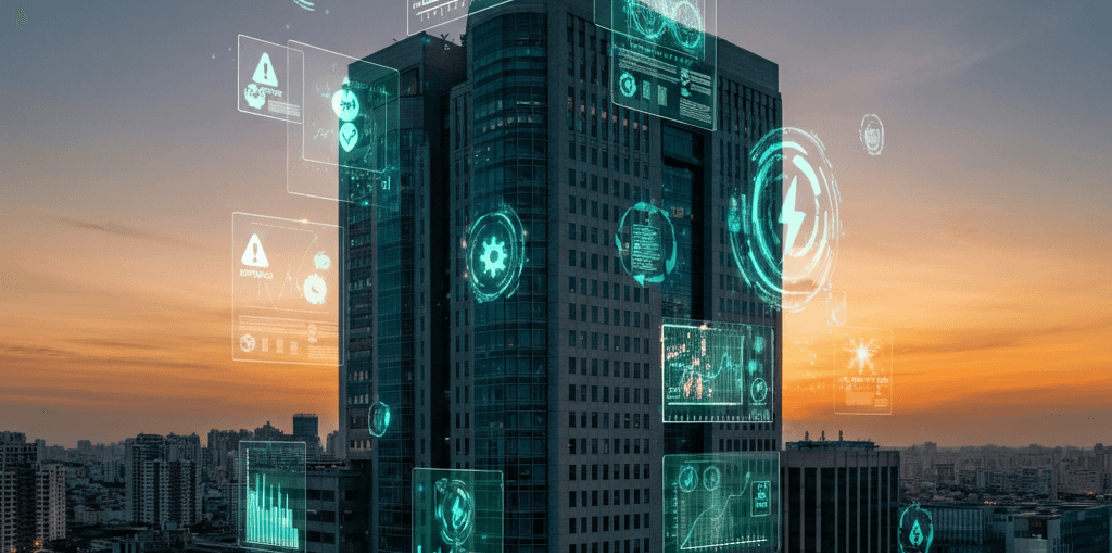
Looking ahead, the future of facilities management with AI is incredibly exciting. Digital twins, virtual replicas of physical buildings, are becoming more sophisticated, allowing facility managers to test scenarios and optimize operations in virtual environments before implementing changes.
The integration of AI with robotics is creating possibilities we're just beginning to explore. Imagine cleaning robots that automatically adjust their routes based on AI analysis of foot traffic patterns, or maintenance robots that can perform routine inspections and minor repairs autonomously. McKinsey research estimates that generative AI could add up to $4.4 trillion in value annually.
We're moving toward truly autonomous buildings that learn and adapt continuously. These self-learning systems will anticipate needs, optimize performance, and even predict future requirements based on changing usage patterns and environmental conditions.
Conclusion
AI in facilities management is transforming how we think about building operations. It delivers measurable benefits:
- improved efficiency
- reduced costs
- enhanced sustainability
- better security
What started as simple automation has evolved into intelligent systems that learn, adapt, and optimize continuously.
The evidence is clear—AI-driven facilities are outperforming those that stick with traditional methods. As technology becomes more accessible and the benefits become more apparent, AI isn't just becoming a useful tool for facility management; it's becoming essential for staying competitive.
The future belongs to intelligent buildings that can think, learn, and adapt. The question isn't whether AI will reshape facilities management, it's how quickly your organization will embrace this transformation.

