
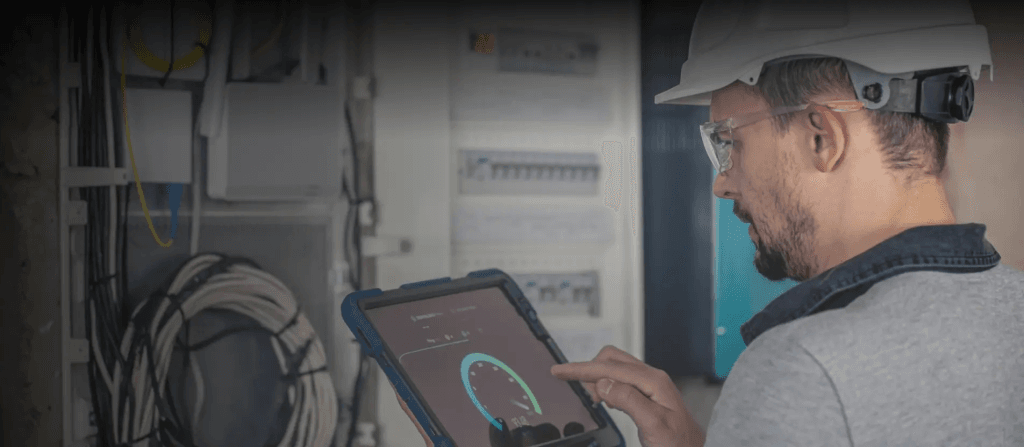
Remember the one frantic scramble across your inventory when critical equipment fails? There were numerous panicked calls, lost time leading to unwanted downtime, and hefty repair bills. The integration of IoT predictive maintenance systems has been a fundamental change for business automation. It flips the script of asset breakdowns by transforming reactive repairs into proactive prevention.
What is IoT-enabled predictive maintenance?
IoT-enabled predictive maintenance systems can predict equipment failures before they occur. These systems work based on data-driven insights, helping businesses transform the way they operate. Several emerging trends are momentous in elevating the overall experience of smart building IoT systems.

- Edge computing:
Edge computing is a process that displays how computed data is and managed in the digital age. It processes time-sensitive data that ensures that computation and data come closer to the location where it is needed.
Instead of relying on a central location for data management, this decentralization reduces latency and enhances real-time processing capabilities. This proximity to data sources (like IoT devices, autonomous vehicles, and smart infrastructure) helps businesses deliver strong competencies, with faster insights and bandwidth availability. Especially for industrial automation, where real-time data act as the heart of building management and operations.
According to the Market Analysis by Statista, by 2026, the Worldwide edge computing market is estimated to reach 317 billion U.S. dollars.
- Digital twins:
Digital twins are virtual twins or virtual representations of processes, physical objects, or complex systems. It acts as a replica of real-world entities, or processes to get users comprehensive, and dynamic view of their physical counterparts and their working.
These digital twins are a bridge between the physical and digital worlds!
They are extensively utilized in monitoring, analyzing, and predicting the behaviors and performance of the physical asset, device, or process in various fields and applications.
These digital twins are not mere static models! They are at the core of the Internet of Things (IoT) and Industrial IoT (IIoT) and these models are capable of a cumulative process; that collects data from connected sensors, devices, or systems in real-time. These virtual models help facility managers with inaccurate predictive analysis of potential issues of the equipment. Statista, in their global forecast, estimated that the market size of the manufacturing industry using digital twin technology is bound to reach over six billion U.S. dollars by 2025.
- Artificial intelligence (AI):
Integrating AI into predictive maintenance systems was a boon to automating facility monitoring and management. It leads to a vast improvement in the accuracy of decision-making and almost leads to automation.
Furthermore, Statista has estimated that they expect the AI market growth to grow twenty-fold by 2030. Currently, the Artificial Intelligence Market Size is nearly 100 billion U.S. dollars.
Top 5 Ways IoT Predictive Maintenance Saves You Money
 There are multiple ways or compelling use cases that demonstrate how IoT-enabled maintenance systems can elevate your savings with a predictive analysis of data.
Below are the top 5 transformative affects of IoT-enabled predictive maintenance:
1. Factory/facilities management:
Imagine tiny sensors/detectors whispering the secrets of your machines. From monitoring simple vibrations and hinting at bearing wear, temperature spikes indicating the risk of overheating, and dripping faucets that help regulate water usage. That's the power of IoT in action.
Facility management only got easier with real-time data analysis with the usage of sensors. It offered a superior proficiency in predicting potential meltdowns before they occur. A building management system integrated into a facility also enables the pertinent users to schedule maintenance purely based on the sensor data.
IoT Predictive Maintenance was a magic elixir that aided organizations in slashing downtime, boosting productivity, and extending equipment life. It also eliminated the necessity of unplanned breakdowns and helped organizations use their assets to their fullest potential.
2. Healthcare powered by data:
Smart maintenance solutions have also helped in the automation of the healthcare industry! With the usage of IoT-enabled asset management systems, even minor equipment hiccups can be detected, thereby aiding in the prevention of consequences that lead to life-or-death scenarios.
IoT monitoring is beneficial for the early detection of issues and is the superhero of maintenance as well. Deloitte, in their Tech Trends 2018, said that the life-care and health science industry must focus on "Being Digital" from "Doing Digital". The healthcare industry is booming with innovations and connected maintenance systems are the icing on the cake. From caring for the equipment to safeguarding the well-being of patients and staff, healthcare IoT and equipment maintenance will take us a long way.
3. Grid and energy management:
What if a power grid whispered its health secrets and predicted the upcoming blackout based on the type of sensor attached? That is, the capability of data and sensors combined in the form of BMS equipped with predictive maintenance.
IoT sensors when attached to transformers and power lines can help immensely in monitoring the voltages, temperatures, and vibrations. The predictions can help you prepare in advance for any potential issues, including overheating or overloading that trigger a blackout. IoT and maintenance best practices are a proactive approach that make your equipment communicate with you effectively.
4. Simplified construction management:
IoT maintenance technology is simplified with sensors tracking construction equipment across sprawling sites. It optimizes the deployment like a GPS for machines. Besides, IoT has numerous applications that even help you with navigation to the asset location.
Implementing IoT in the maintenance of assets helps in finding potential issues before they delay projects with improper asset management. This is IoT in action!
IoT streamlines scheduling maintenance, reduces idle time, and prevents equipment breakdowns that halt progress. The result? There are several benefits for the construction industry, leading to faster project completion, reduced costs, and finally happier clients.
5. Transforming the retail sector:
Inventory management is a hassle for facility owners and managers. Remote monitoring for maintenance of assets and inventory and you can say goodbye to empty shelves and frustrated customers!
Imagine tiny sensors keeping tabs on inventory levels in real-time, triggering reorders automatically before the stock depletes. With IoT, you decrease manual stocktaking, prevent stock-outs, and optimize delivery schedules.
A research insight by NRF forecasted that retail sales for 2023 will grow between 4% and 6%. That is an approximation of $5.13 trillion - $5.23 trillion. For a fact, we can expect that IoT and maintenance best practices will aid in attaining the forecasted growth!
Ready to ditch the regular maintenance for IoT Predictive Maintenance?

