
Imagine you are a facility manager in a traditional marketing setting, tasked to handle several facilities with thousands of assets. Do you relate to that one frantic search for that missing inventory item? There is lost productivity, frustrated customers, and a creeping suspicion hiding under a mountain of paperwork! Welcome to IoT asset tracking - the world of modern asset management.
IoT has transformed the management and operation of facilities with its modern automotive solution. Asset tracking becomes more than a mere concept—it’s a game-changer tool that eliminates the guesswork. It helps you in taking a step into a clear, real-time picture of your assets, wherever they are placed.
Transforming Asset Management with the Power of IoT
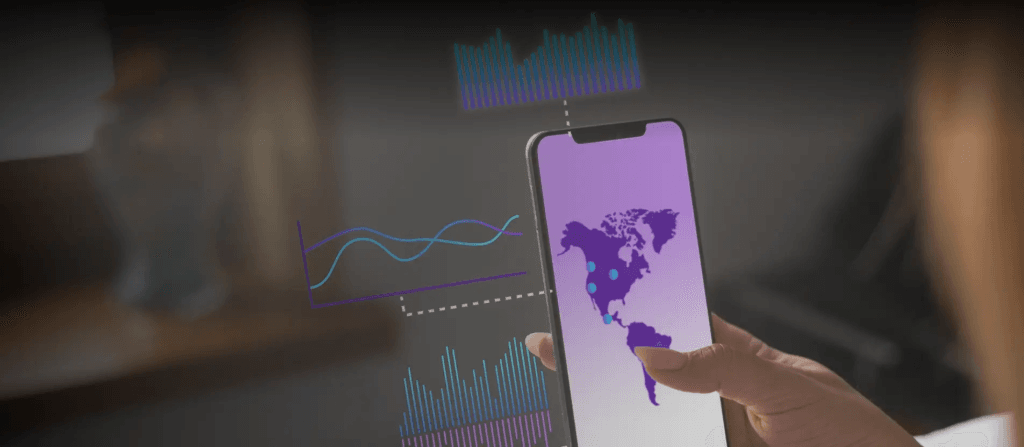
 Imagine tiny, intelligent sensors attached to your equipment, tools, assets, or location. These asset-monitoring IoT constantly broadcast their location, condition, and even usage data. They paint a live map of your operations on the asset in the form of a graph to be interpreted by the assigned personnel.
Consider a use case scenario:
Logistics company A is tracking inventory manually. Another logistics company, B, utilizes IoT asset tracking. The former is devoid of web-based inventory while the latter has access to the overall data and structure of the inventory in a pane of glass. Company B can also pinpoint the precise location of shipments throughout its business journey even without a physical presence.
Which company do you think is effective in implementing the strategies that they have set? How is IoT asset tracking and asset management software handling a multitude of assets?
With asset management software, company B will meet its ROI and cut down on expenses. These software are not for asset management alone but act like customer and inventory management software.
The cargo of company B is embedded with sensors that provide live and real-time updates. These sensors take note of conditions, temperature, and even unexpected shocks or trembling experienced during transit. It is all fed to the cloud-based servers or the enterprise digital asset management solutions. This real-time data is a goldmine of insights.
In the retail sector, sensor data can be used to optimize routes and predict delivery times accurately. These are factors that assist in maintaining the quality of goods in transit. For instance, consider the healthcare industry with perishable goods like pharmaceuticals or food items. They need constant supervision to ensure that the goods reach their destinations in pristine condition.
How IoT Implementation can Unleash the Potential of Asset Management Software?
 IoT asset tracking is about the holistic approach to enterprise digital asset management solutions. It extends way beyond location data and asset data management.
The comprehensive view of all the assets utilized in the business can be viewed in a single frame and handled under a single organizer without feeling the need to employ several others. Integrated asset management software, powered by IoT, monitors EVERYTHING! From machinery and equipment to vehicles and inventory to employees to end-users - it has GOT YOU COVERED.
Tracking inventory manually was traditionally considered a time-consuming ordeal and was prone to errors, despite due diligence. Asset monitoring IoT helped businesses bid farewell to manual data management. It showed them the path to embrace automated, web-based inventory management.
Web-based inventory management software communicates in real-time with the devices to procure data from them and convert them to comprehensible data for the human mind. This centralized system of data handling aided the facility managers in effortlessly monitoring inventory levels, identifying trends, and foreseeing stock replenishment needs in time.
Here's how IoT asset tracking gives your business a superpower:
- ### Track the location: With an asset monitoring IoT, you facilitate the simplified and real-time tracking of assets in any corner of the world. You can navigate to the asset location with a pathfinder or with remote monitoring to procure data from the assets with no delay!
Reduce the time wasted on searching and optimizing the routes of your assets/location in your facility and embrace the finesse and efficiency of IoT and what it does for your business.
- ### Condition-based maintenance: The functionality of smart sensors extends way beyond mere tracking. They not only track assets but also help you monitor temperature, vibrations, and even leaks in the valves of various equipment.
The application of which is enormous. Managers can reap the benefits by being very specific to each of the assets and equipment they are using for numerous purposes.
- ### Intelligent inventory management: Web-based inventory can eliminate the manual counting marathon where multiple employees have to be employed. IoT sensors, however, can accurately track your inventory levels with no errors!
Besides, these systems give you insights based on real-time data and also alert you. It could be regarding low stocks but also assist you in automated reordering based on depleting levels or even predict the approximate time possible depletion of stocks.
IoT is not a TECH UPGRADE! It's a STRATEGY FOR BUSINESS GROWTH!
Moreover, IoT-driven asset management extends its benefits to customers and inventory management. Tailored business offerings can be attained that match customer preferences using these innovative IoT solutions.
Learn to implement them in your business or ask us HOW!
Real-World Examples and Statistics of IoT Asset Tracking

- Construction: A construction company, Skanska VP uses sensors to track equipment across job sites and other construction needs. With the use of AI, they could work efficiently in working on optimizing the deployment and also reducing idle time.
According to Construction Technology News, Will Senner, Leader of Data Solutions Team, Skanska said, "About a year ago, we went through a pretty structured and rigorous process to think about our pipeline of data use cases, AI- and non-AI related. Then there are more customized tools that we’re looking to develop, which would be more proprietary solutions. So using the same kind of natural language technology, but training it not on the data on the internet, but training it on Skanska-specific data." This approach resulted in a 15% reduction in cost and a 20% increase in efficiency in project completion.
Logistics: DHL, a global shipping and logistics provider used GPS sensor tags to track shipments in real-time. This resulted in improving the visibility of the delivery showed a 15% decrease in delivery times and aided in customer satisfaction.
The Gartner study and its prediction forecasted that IoT asset tracking global market size is bound to reach $968 billion by 2026.
A report by McKinsey & Company on the application of the Internet of Things boasted an 11 trillion impact and the potential usage of assets by 20-30%.
The study by Accenture, on how digitization drives smarter supply chains, recorded that there was a 30% reduction in operating costs for companies using IoT asset tracking.
The anecdotes speak for themselves and there is no going back when it comes to technological innovations. It's time to stop managing assets in the dark and to let the IoT light the way to a brighter, more profitable future.
Click here to unlock the potential of IoT asset tracking for your business!

